
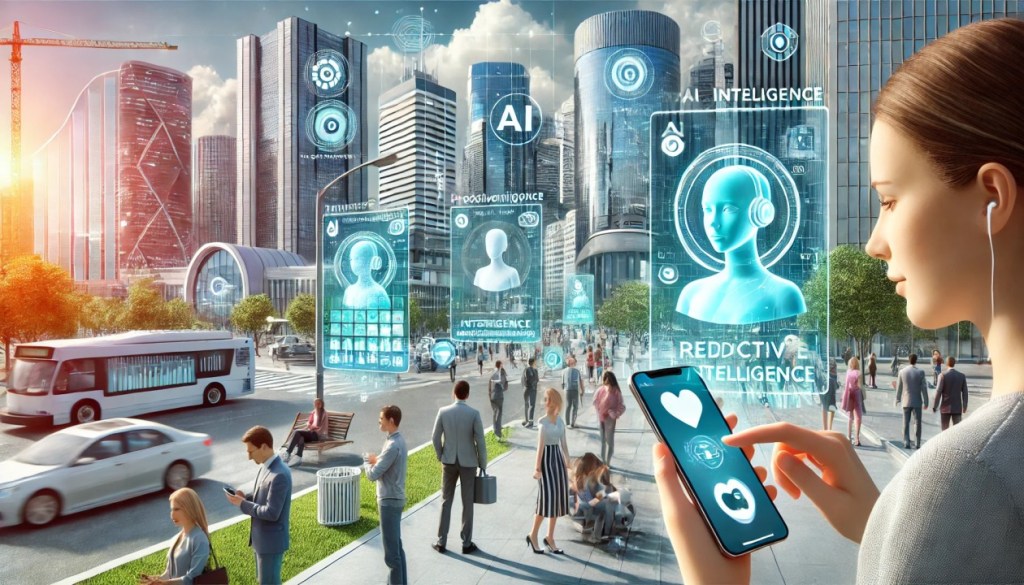
Imagine waking up in the morning to the sound of your favourite music, your coffee brewing automatically, and a friendly voice reminding you of your schedule for the day. No, this isn’t the opening scene of a science fiction movie—it’s the reality brought to us by virtual assistants. These sophisticated AI-powered tools are revolutionizing how we interact with technology, offering a level of personalization and convenience that was once unimaginable.
So, what exactly is a virtual assistant? A virtual assistant is a digital helper who performs various tasks or services based on your commands. Unlike simple chatbots that provide pre-programmed responses, virtual assistants can understand and process natural language. They can interpret complex requests, learn from interactions, and deliver increasingly tailored and relevant responses. Think of them as a combination of a highly efficient secretary, a knowledgeable guide, and a tech-savvy companion all rolled into one.
Virtual assistants such as Amazon’s Alexa, Google Assistant, and Apple’s Siri have laid the groundwork for AI-powered interactions. Still, the next generation of virtual assistants is poised to take this technology to new heights. Current generation assistants are impressive, yet they still face limitations in genuinely understanding and anticipating user needs in a nuanced way. The future of virtual assistants lies in advanced AI capabilities that push the boundaries of personalization, context awareness, and predictive intelligence.
Predictive Intelligence: Anticipating User Needs
Predictive intelligence is a cornerstone of the next generation of virtual assistants. By analyzing patterns in user behaviour, these AI systems can anticipate needs and take actions preemptively. For example, if your virtual assistant notices you frequently order groceries on a Friday evening, it might automatically prepare a shopping list or place an order for you. This level of foresight is made possible by sophisticated AI models that process and analyze vast amounts of data in real time.
According to a report by McKinsey, companies that leverage AI to anticipate and meet customer needs can significantly enhance customer satisfaction and loyalty (1). This predictive capability sets the next generation of virtual assistants apart, offering a seamless and intuitive user experience. These assistants don’t just wait for commands—they proactively provide solutions and suggestions based on a deep understanding of user habits and preferences.
Personalized and Context-Aware Interactions
Advanced AI virtual assistants can understand context much more deeply than their predecessors. They can differentiate between the nuances of language, recognize user emotions, and even understand the intent behind ambiguous commands. For instance, if you mention feeling stressed, an advanced AI assistant might suggest relaxation techniques or play calming music without explicitly asking for it. This level of personalization is achieved through continuous learning and adaptation from every interaction.
A study by Accenture highlights the potential of AI to deliver hyper-personalized experiences. 91% of consumers are likelier to shop with brands that provide relevant offers and recommendations (2). This capability extends beyond shopping to various aspects of daily life, making AI-enabled virtual assistants indispensable.
The Power of Advanced AI
Their enhanced ability to learn, adapt, and anticipate sets the next generation of virtual assistants apart. These advanced AI systems are not just reactive—they are proactive. They utilize deep learning algorithms and vast datasets to predict user needs and provide solutions even before a command is given. This shift from reactive to proactive assistance marks a significant leap in AI capabilities.
Enhanced Learning and Adaptation
The core strength of advanced AI lies in its ability to learn and adapt continuously. Machine learning algorithms process every interaction to refine their understanding of user behaviour. This learning is not static; it evolves, making it more accurate and relevant for virtual assistants. For example, if a user frequently asks for news updates, the assistant will learn to prioritize news-related queries and suggest articles that align with the user’s interests.
A Stanford University study emphasizes that these learning algorithms enable virtual assistants to perform tasks with increasing accuracy and efficiency, ultimately leading to a more seamless user experience (3). This continuous improvement ensures that virtual assistants can keep pace with changing user needs and preferences, providing a level of service that feels almost intuitive.
Proactive Problem Solving
Advanced AI virtual assistants are designed to solve problems before they even arise. This proactive problem-solving ability is driven by sophisticated predictive models that analyze historical data to forecast future needs. For instance, if a virtual assistant detects a pattern of forgotten appointments, it might start proactively offering reminders or scheduling assistance. This proactive approach enhances user convenience and increases productivity and efficiency.
According to research by Forrester, businesses that implement AI-driven predictive solutions significantly improve operational efficiency and customer satisfaction (4). This proactive problem-solving capability is a crucial differentiator of advanced AI virtual assistants, setting them apart from traditional reactive systems.
Deep Contextual Understanding
Contextual understanding is another area where advanced AI excels. Virtual assistants can provide more accurate and relevant responses by analyzing the context in which commands are given. This involves understanding spoken words and considering the time, location, user history, and emotional tone. For example, if a user asks for “restaurants nearby” while driving, the assistant might prioritize drive-thru options or restaurants with easy parking.
A report by MIT Technology Review highlights that context-aware AI can significantly enhance user interactions, making them more natural and intuitive (5). This deep contextual understanding allows virtual assistants to deliver a truly personalized experience, anticipating user needs and preferences almost humanly.
Enhancing Business Efficiency
The implications of advanced AI virtual assistants extend far beyond personal convenience. In the business world, these assistants transform operations by automating complex tasks, analyzing data, and providing strategic insights. Virtual assistants can handle customer service inquiries, manage schedules, and even assist decision-making by providing data-driven recommendations.
Automating Repetitive Tasks
One of the significant benefits of AI-enabled virtual assistants in business is their ability to automate repetitive tasks. This includes scheduling meetings, managing emails, and handling routine customer inquiries. By automating these tasks, virtual assistants free up human employees to focus on more strategic and creative work. According to a report by McKinsey, automation can increase productivity by 20-25%, allowing businesses to allocate resources more efficiently (6).
For example, at Microsoft, virtual assistants automate customer support tasks, significantly reducing response times and improving customer satisfaction. This automation is achieved through AI algorithms that can handle multiple queries simultaneously, providing accurate and timely responses to customer needs (7).
Data Analysis and Insights
Advanced AI virtual assistants are also crucial in analyzing large datasets to extract valuable insights. Businesses generate vast amounts of data daily, and AI assistants can process this information to identify trends, patterns, and anomalies. These insights can inform strategic decisions, optimize operations, and drive innovation.
A case study by IBM showcases how their AI assistant, Watson, is used in various industries to analyze complex data sets and provide actionable insights. In healthcare, Watson assists doctors by analyzing patient records and suggesting potential diagnoses and treatment plans, leading to more informed and effective medical decisions (8).
Enhancing Customer Experience
Customer experience is a critical factor in business success, and AI-enabled virtual assistants enhance this experience by providing personalized and responsive service. These assistants can remember customer preferences, anticipate needs, and offer tailored recommendations. This level of personalized service can increase customer loyalty and drive sales.
For instance, Bank of America’s virtual assistant, Erica, uses AI to provide customers with financial advice, monitor transactions, and alert them to potential fraud. This personalized interaction has increased customer engagement and satisfaction (9).
Reducing Operational Costs
Implementing AI virtual assistants can also lead to significant cost savings. By automating tasks and improving efficiency, businesses can reduce operational expenses. A report by Deloitte highlights that AI-enabled virtual assistants can reduce operational costs by 30% while improving efficiency and accuracy in various business functions (10). These savings can be reinvested in other business areas, driving growth and innovation.
Overcoming Challenges
Despite the numerous benefits, adopting advanced AI virtual assistants also presents challenges. Privacy and security concerns are paramount, as these assistants often handle sensitive personal information. Maintaining user trust ensures robust data protection measures and transparent user consent protocols. According to a survey by the Pew Research Center, 54% of users are concerned about their privacy when using voice assistants, highlighting the need for stringent security measures (11).
Conclusion
As we stand on the brink of a new era in artificial intelligence, the potential of AI-enabled virtual assistants is boundless. These advanced tools enhance our daily lives with unprecedented convenience and personalization and transform businesses’ operations. By harnessing the power of deep learning, context-aware interactions, and predictive intelligence, virtual assistants are setting a new standard for human-machine collaboration. As technology continues to evolve, these digital helpers will become even more integrated into our lives, pushing the boundaries of what we thought possible and bringing us closer to a seamless, intelligent future.
References
1. “The Promise and Challenge of the Age of Artificial Intelligence.” McKinsey Global Institute, 2018, www.mckinsey.com/business-functions/mckinsey-analytics/our-insights/the-promise-and-challenge-of-the-age-of-artificial-intelligence.
2. “How AI Boosts Personalization and Drives Growth.” Accenture, 2019, www.accenture.com/us-en/insights/artificial-intelligence/ai-personalization-growth.
3. “Artificial Intelligence and Life in 2030.” Stanford University, 2016, ai100.stanford.edu/2016-report.
4. “Predictions 2020: Artificial Intelligence.” Forrester, 2019, go.forrester.com/research/predictions-2020/artificial-intelligence.
5. “The Evolution of AI: Context-Aware Systems.” MIT Technology Review, 2020, www.technologyreview.com/2020/01/01/the-evolution-of-ai-context-aware-systems.
6. “A Future That Works: Automation, Employment, and Productivity.” McKinsey Global Institute, 2017, www.mckinsey.com/featured-insights/digital-disruption/harnessing-automation-for-a-future-that-works.
7. “Microsoft Uses AI to Improve Customer Support.” Microsoft, 2020, news.microsoft.com/microsoft-uses-ai-to-improve-customer-support.
8. “IBM Watson: Transforming Industries with AI.” IBM, 2020, www.ibm.com/watson/stories.
9. “Bank of America’s Virtual Assistant Erica Reaches 10 Million Users.” Bank of America, 2019, newsroom.bankofamerica.com/erica-reaches-10-million-users.
10. “AI-Fueled Organizations.” Deloitte Insights, 2018, www2.deloitte.com/us/en/insights/focus/cognitive-technologies/ai-fueled-organization.html.
11. “Privacy and Security Issues in Voice Assistants.” Pew Research Center, 16 Dec. 2019, www.pewresearch.org/internet/2019/12/16/attitudes-and-behaviors-of-smart-speaker-users.


Leave a comment